Korean students have always placed a strong emphasis on education and long-term career preparation. In the last decade, however, I believe that how they think about studying abroad has been evolving.
While overseas education was once closely associated with prestige and aspiration, today’s students are increasingly focused on its practical outcomes and how international experiences fit into their larger career goals.
More simply put: study abroad is no longer viewed by Korean students as a symbolic milestone – it’s seen as a tool. It’s common for students to arrive at our advising sessions with very clear objectives in mind, whether that’s improving English proficiency, building international networks, gaining exposure to different working cultures or exploring future global career paths.
A More Outcomes-Focused Mindset
Right now, students and families in Korea view study abroad through the lens of outcomes and employability. There is growing awareness that studying abroad alone no longer guarantees stronger job prospects or automatically differentiates candidates in an increasingly competitive market.
Instead, students are focused on what they can tangibly gain from the experience: stronger communication skills, cross-cultural competency, independence and the ability to adapt to unfamiliar environments.
Because of this, students and families are also looking for proof: concrete examples of what successful outcomes can actually look like. Many are highly interested in hearing real stories from alumni who have successfully leveraged international experiences in meaningful ways. They want to understand not only where alumni studied, but how they built networks, positioned themselves in interviews and translated study abroad experiences into internships, jobs or graduate school opportunities.
The Influence of Korea’s Global Job Market
This shift is also closely connected to changes happening within Korea’s job market itself. As many Korean companies continue expanding internationally, there is increasing demand for candidates who can work effectively across cultures and communicate confidently in global environments.
At the same time, employers are placing greater emphasis on demonstrated capability and practical experience rather than overseas study participation alone. Students are very aware of this.
As a result, many students today are thinking more carefully about the type of international program they choose and what specific value it can offer them.
Short-term summer programs are often viewed as exploratory experiences, an opportunity to gain initial international exposure, improve language skills or test living abroad in a lower-pressure environment. In many cases, these programs are also partially funded by home universities, making them more accessible to a wider range of students.
In contrast, students pursuing semester- or year-long programs tend to be much more career-focused, prioritizing institutions and experiences that offer networking opportunities, professional exposure or clearer pathways for future development.
The Value of Communities Beyond the Classroom
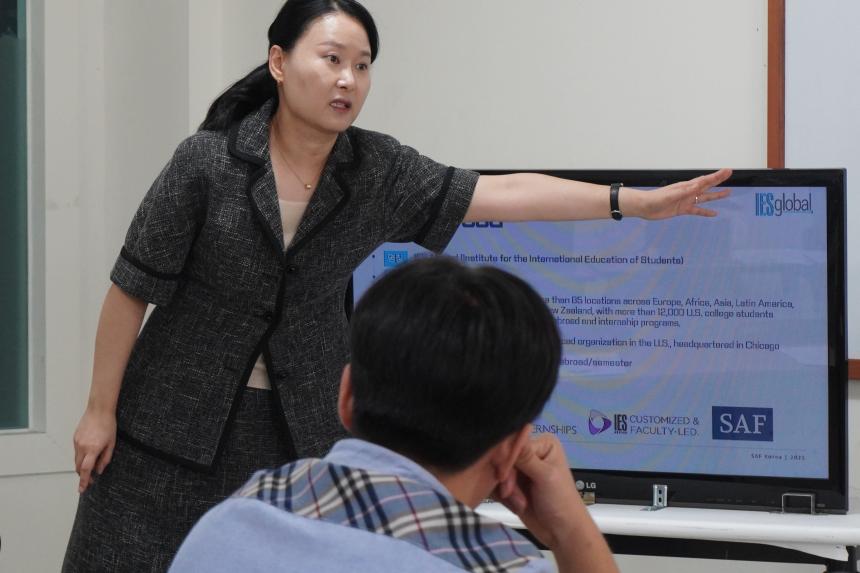
At SAF, this is why we place strong emphasis not only on academics, but also on creating opportunities for students to learn from one another and connect with alumni who have successfully translated international experiences into long-term personal and professional growth.
In Korea, support structures for study abroad can vary significantly between universities. While larger institutions often have well-developed global offices and extensive international partnerships, smaller universities may operate with fewer resources and more limited advising capacity. Because of this, many students place significant value on mentorship, alumni networks and practical guidance from people who have already navigated similar experiences.
That sense of community can make a meaningful difference as students make decisions about studying abroad and think about future career paths. For many, those shared experiences and personal connections ultimately become just as valuable as the classroom learning itself.